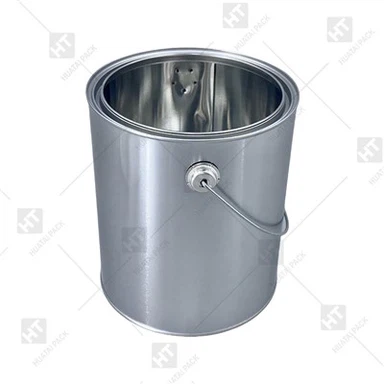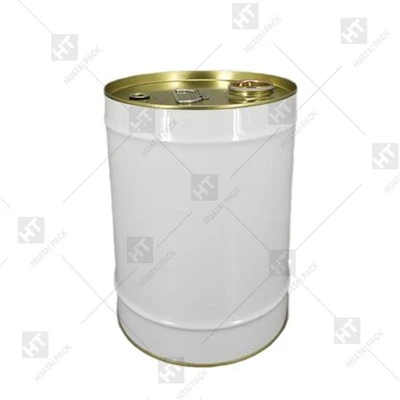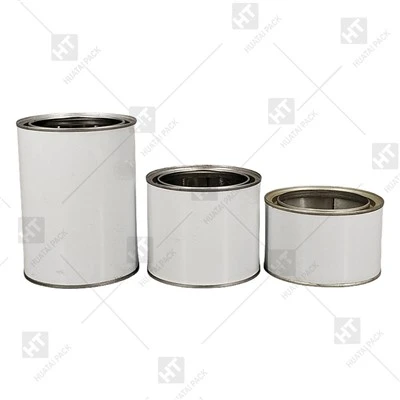


What is the manufacturing process of Tin Pail?
Nov 13, 2024
1. Design and planning:
Determine the purpose and size: According to the purpose and needs of Tin Pail, determine its size parameters such as capacity, diameter, height, etc. For example, if it is used to store tea, a smaller size may be required; if it is used for industrial purposes, a larger size may be required.
Design appearance and structure: Consider the appearance and shape of Tin Pail, the connection method between the barrel body and the barrel cover, the design of the handle or ear, etc. At the same time, it is also necessary to ensure the stability and sealing of the structure to meet different usage requirements.
2. Raw material preparation:
Select tin material: Use tin with higher purity as the main raw material, generally requiring the purity of tin to be above 99%. The higher the purity of tin, the better the quality of the Tin Pail made and the stronger its corrosion resistance.
Prepare auxiliary materials: According to needs, some auxiliary materials may also need to be prepared, such as rubber rings for sealing, screws or rivets for connection, etc.
3. Cutting and forming:
Cutting tin plate: Cut the tin material into a suitable size and shape according to the design requirements, usually using shearing machines or laser cutting machines and other equipment for cutting.
Forming: Through stamping, stretching, bending and other processes, the cut tin plate is processed into the shape of the barrel body and barrel cover. For example, a punching machine is used to punch the tin plate into a round or square barrel bottom and barrel body, a stretching machine is used to stretch the barrel body to the required height, and a bending machine is used to bend the barrel cover into a suitable arc.
4. Welding and assembly:
Welding the barrel body and barrel bottom: Weld the formed barrel body and barrel bottom. Common welding methods include tin welding, argon arc welding, etc. When welding, it is necessary to ensure that the welding is firm and there are no defects such as leaking welding and cold welding to ensure the sealing of the Tin Pail.
Assembling the barrel cover and handle: Assemble the barrel cover and the barrel body. Screws, rivets or welding can be used to connect them. At the same time, handles or ears are installed to facilitate the handling and use of Tin Pail.
5. Surface treatment:
Grinding and polishing: Grind and polish the welded Tin Pail to remove burrs, welding slag and oxide layers on the surface, so that the surface of Tin Pail is smooth and flat, and its appearance is improved.
Electroplating or painting: In order to enhance the corrosion resistance and decorativeness of the Tin Pail, electroplating or painting can be performed. Electroplating can plate a layer of other metals on the surface of the Tin Pail, such as chromium, nickel, etc.; for painting, different colors of paint can be selected to increase the beauty and recognition of the Tin Pail.
6. Quality inspection:
Appearance inspection: Check whether the appearance of the Tin Pail is smooth and flat, without obvious defects and flaws, such as scratches, pits, deformation, etc.
Dimension inspection: Use measuring tools to detect the size of the Tin Pail to ensure that it meets the tolerance range required by the design.
Sealing test: The sealing test of the Tin Pail is usually carried out by water injection or inflation to check whether the Tin Pail has leakage.
Pressure test: For some Tin Pails that need to withstand a certain pressure, such as Tin Pails used to store compressed gas, pressure tests are also required to ensure their safety during use.
7. Packaging and transportation:
Packaging: Pack the qualified Tin Pail, usually using cartons, wooden boxes or plastic films to prevent damage during transportation.
Transportation: According to the weight, volume and transportation distance of the Tin Pail, choose the appropriate transportation method, such as road transportation, railway transportation, air transportation, etc. During transportation, it is necessary to avoid collision, squeezing and falling, etc., to ensure that the Tin Pail arrives safely at the destination.