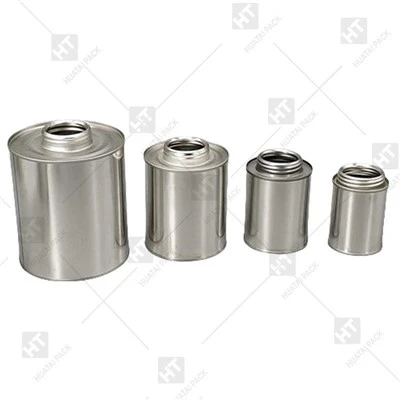


How to Judge the Quality of Glue Cans
Aug 24, 2026
I. Appearance and Basic Details Inspection
1. Can Surface: High-quality glue cans have a smooth surface without burrs, deformation, or dents. Printed markings are clear and complete. Inferior products will have scratches, bulges, and paint peeling.
2. Can Opening and Welds: Welds on metal cans should be smooth, without incomplete welds or pinholes. The edges of the can opening on plastic/fiberglass cans should be neat and free of burrs to prevent leaks due to poor sealing.
3. Accessory Completeness: All matching accessories, such as lids, sealing rings, and nozzles, should be complete, without missing parts or cracks. Threaded joints should rotate smoothly without jamming.
II. Material Performance Verification
1. Material Thickness: Measure the can wall thickness with calipers. Industrial glue cans must have uniform wall thickness that meets standards. Uneven thickness results in poor pressure resistance and is prone to deformation and leakage.
2. Material Compatibility: For stainless steel cans, a material testing report can be requested to confirm that they are made of 304/316 food-grade/industrial-grade material. For plastic cans, it must be confirmed that they are made of virgin material, not recycled material, to avoid corrosion and swelling by the adhesive.
3. Temperature and Corrosion Resistance Test: Fill the can with the corresponding adhesive and let it stand for 72 hours. Observe whether the can softens, discolors, or leaks, to verify whether its chemical corrosion resistance and temperature resistance are suitable for the working conditions.
III. Sealing and Practical Performance Test
1. Water Sealing Test: Fill the can with clean water, tighten the cap, invert and shake for 3 minutes. Observe whether there is any water leakage at the can opening and weld seams, indicating that the basic sealing performance is qualified.
2. Pressure Test: Industrial pressure-bearing adhesive cans can be pressurized with 0.2MPa compressed air for 30 minutes. If there is no significant pressure drop, it is qualified, to avoid bulging and leakage during adhesive storage.
3. Opening and Closing Durability: The threaded cap should not strip after being repeatedly turned more than 20 times, and the sealing ring should not shift, confirming that the seal remains effective even with frequent use over a long period.
IV. Compliance and Additional Verification
1. Certification Labeling: Legitimate products must be labeled with the manufacturer's name, specifications, applicable standards, and date of manufacture. Hazardous chemical glue containers must have the corresponding hazardous packaging certification. Food-grade containers must provide a food contact safety test report.
2. Brand and Reputation: Prioritize products from reputable brands within the industry, avoiding inferior containers from small, unregulated factories to reduce the risk of subsequent glue leakage and glue deterioration.
3. Aging Performance Prediction: For fiberglass/plastic containers, prioritize models with added UV-resistant components, as they are less prone to embrittlement and cracking during long-term outdoor use.