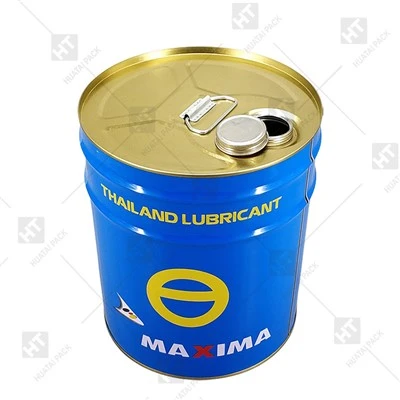


Effects of high summer temperatures on the performance of the oil in Metal Drum For Engine Oil
Jun 20, 2025
1. Accelerated oxidation rate
High temperatures accelerate the oxidation reaction when the oil comes into contact with air. Although metal drums can isolate external impurities, they cannot completely prevent oxygen from penetrating through tiny gaps or seals. Oxidation will increase the viscosity of the oil, generate acidic substances and sludge, weaken the lubrication effect, and even corrode engine parts. For example, in an environment that is continuously above 35°C, the oxidation rate of unopened oil may increase by 20%-30% compared to normal temperature, and long-term storage will cause the oil to deteriorate prematurely.
2. Viscosity change and evaporation loss
The viscosity of the oil is sensitive to temperature. High temperatures in summer may temporarily reduce the viscosity of the oil in the barrel (especially single-grade oil). If the storage temperature exceeds its tolerance range (such as over 60°C), the base oil may evaporate, resulting in a reduction in the volume of the oil and an imbalance in the concentration of additives. For multi-grade oils (such as 5W-30), although the viscosity stability can be maintained at high temperatures, long-term high temperatures may still destroy the structure of the polymer additives, reduce their "temperature adaptability", and affect the lubrication protection when the engine is started.
3. Heat conduction and sealing risks of metal barrels
Metal barrels have strong thermal conductivity. When stored outdoors in summer, the heat absorbed by the barrel body will be directly transferred to the engine oil, exacerbating the temperature increase. If the barrel cover seal ages due to high temperature (such as hardening and cracking of the rubber seal), it may cause moisture and dust to invade, causing the engine oil to emulsify or contaminate. In addition, the increase in air pressure in the barrel at high temperature may cause the "drum" phenomenon, further destroying the seal and even causing engine oil leakage.
4. Additive performance degradation
Additives such as detergents and dispersants in engine oil may decompose and become ineffective at high temperatures. For example, antioxidants are consumed faster, causing the engine oil to lose its "self-protection" ability; anti-wear agents (such as sulfur and phosphorus compounds) may react prematurely at high temperatures, reducing the protective effect on the friction surface of the engine. The comprehensive performance of engine oil stored at high temperatures for a long time may be lower than the shelf life standard specified by the manufacturer even if it is not opened.
Suggestions
Store away from light: Place the metal barrel in a cool place or use a sunshade to avoid direct sunlight.
Control the ambient temperature: Keep the storage temperature below 30℃ as much as possible and keep away from heat sources (such as engines and exhaust pipes).
Check the sealing status: Check the barrel cover seal regularly to see if it is aged and ensure that the barrel body is not dented or damaged.
Priority use principle: Follow the "first in, first out" principle to avoid long-term storage of unopened engine oil.
Reasonable storage of engine oil in summer can effectively delay performance degradation and ensure the lubrication effect of the engine. If the color of the engine oil becomes darker, precipitation or odor is found, it is recommended to conduct oil testing before deciding whether to use it.
If you need high-quality Metal Drum For Engine Oil, please contact Huatai Packaging Products for more questions.