

What is the quality standard of a 1l 4l square tin can?
Sep 08, 2025
As a supplier of 1L and 4L square tin cans, I understand the importance of quality standards in the manufacturing and supply of these products. In this blog, I will delve into the quality standards that a 1L or 4L square tin can should meet, which are crucial for ensuring product safety, functionality, and customer satisfaction.
Material Quality
The first and foremost aspect of the quality standard for square tin cans is the material used. Tin cans are typically made from steel coated with a thin layer of tin. The steel should be of high - grade quality, with appropriate thickness to provide sufficient strength and durability. For 1L and 4L square tin cans, the steel thickness might vary depending on the intended use. If the cans are to be used for storing heavy or corrosive substances, a thicker steel layer is required.
The tin coating is essential as it provides a protective barrier against rust and corrosion. A high - quality tin coating should be uniform in thickness across the entire surface of the can. Any unevenness in the tin coating can lead to areas of vulnerability where rust can start to form. This can compromise the integrity of the can and potentially contaminate the contents.
When sourcing the steel and tin materials, we ensure that they comply with international standards such as ISO (International Organization for Standardization) and ASTM (American Society for Testing and Materials). These standards define the chemical composition, mechanical properties, and other quality parameters of the materials. For example, ASTM A623 specifies the requirements for tin - mill products, including the amount of tin coating and the surface finish.
Structural Integrity
The structural integrity of a square tin can is another critical quality factor. A well - designed 1L or 4L square tin can should be able to withstand the pressure exerted by its contents, as well as external forces during handling, transportation, and storage.
The corners and edges of the square tin can are areas of high stress concentration. Therefore, they need to be properly reinforced. Our square tin cans are manufactured with rounded corners and well - formed edges to distribute stress evenly. This design feature not only enhances the structural strength of the can but also reduces the risk of damage during stacking and handling.
The seams of the can, including the side seam and the bottom and top seams, must be tightly sealed. A leak - proof seam is essential to prevent the contents from leaking out and to keep contaminants from entering the can. We use advanced welding and sealing techniques to ensure that the seams are strong and reliable. For example, the side seam is often welded using a resistance welding process, which creates a strong bond between the steel sheets.
Dimensions and Tolerances
Accurate dimensions are vital for square tin cans. The 1L and 4L square tin cans should have precise internal and external dimensions to ensure proper fit with closures, labels, and other packaging components.
The internal volume of the can should match the specified capacity (1L or 4L) within a certain tolerance range. This is important for customers who rely on accurate measurements for their products. For example, if a customer is filling the can with a liquid product, they need to know that the can will hold the exact volume they require.
The external dimensions of the can, such as length, width, and height, also need to be consistent. This is crucial for stacking and storage purposes. If the dimensions vary too much, it can lead to instability during stacking, increasing the risk of damage to the cans and their contents. We adhere to strict dimensional tolerances as defined by industry standards to ensure the uniformity of our square tin cans.
Surface Finish
The surface finish of a square tin can not only affects its appearance but also its functionality. A smooth and clean surface finish is essential for printing labels and applying coatings.
The surface of the can should be free from scratches, dents, and other defects. These imperfections can not only make the can look unappealing but also weaken the tin coating, increasing the risk of corrosion. Our manufacturing process includes a quality control step where the surface of the cans is inspected for any defects.
In addition, the surface finish can be enhanced with coatings for specific applications. For example, if the can is to be used for storing food products, a food - grade coating can be applied to the interior of the can to prevent any interaction between the food and the metal. On the exterior, a protective coating can be applied to improve the can's resistance to abrasion and corrosion.
Compatibility with Contents
A 1L or 4L square tin can should be compatible with the contents it is intended to hold. This means that the can should not react with the contents, and the contents should not cause any damage to the can.
If the can is used for storing liquids, such as oil, it should be resistant to the chemical properties of the liquid. Metal Can For Oil should be designed to prevent oil from seeping through the can and to protect the oil from oxidation and contamination. Our square tin cans for oil storage are often lined with a special coating that provides excellent chemical resistance.
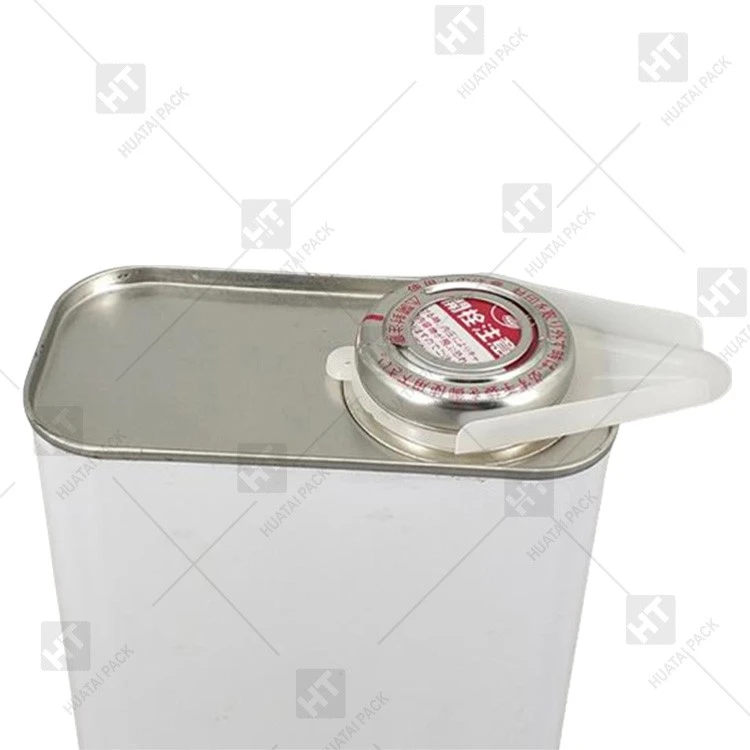
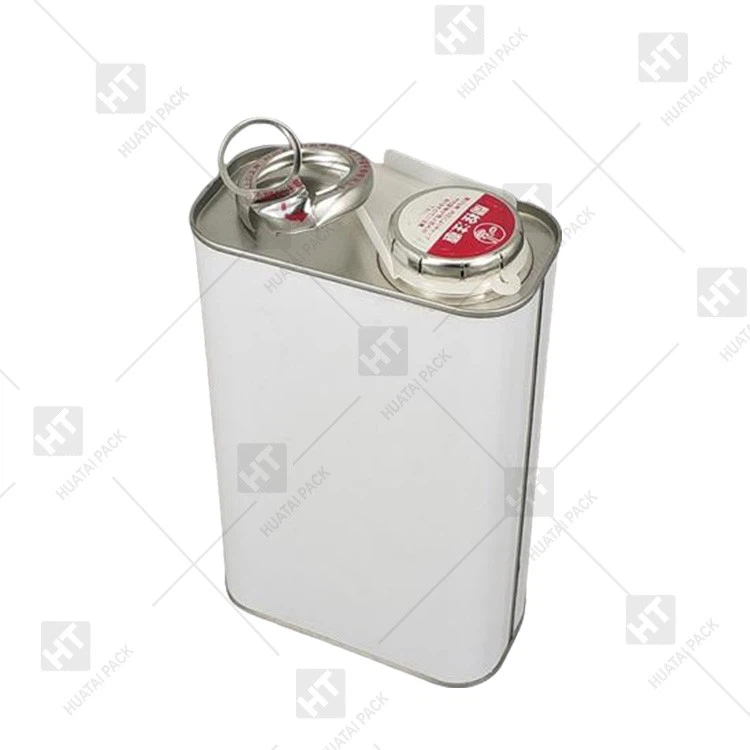
For food products, the can must comply with strict food safety regulations. The materials used in the can, including the tin coating and any interior coatings, must be non - toxic and safe for contact with food. We ensure that our square tin cans for food applications meet all relevant food safety standards, such as those set by the FDA (Food and Drug Administration) in the United States.
Environmental Considerations
In today's world, environmental considerations are an important part of the quality standard for square tin cans. Our square tin cans are made from recyclable materials, which helps to reduce the environmental impact.
The manufacturing process is also optimized to minimize waste and energy consumption. We use efficient production techniques that reduce the amount of scrap material generated during the manufacturing process. Additionally, the cans are designed to be easily recyclable at the end of their life cycle.
Meeting Customer Requirements
In addition to the above - mentioned quality standards, we also strive to meet the specific requirements of our customers. Different customers may have different needs, such as custom - designed labels, special closures, or unique colors.
We work closely with our customers to understand their requirements and provide customized solutions. For example, if a customer needs a square tin can with a specific logo printed on it, we have the capabilities to print high - quality labels using advanced printing technologies.
Conclusion
In conclusion, the quality standard of a 1L or 4L square tin can encompasses multiple aspects, including material quality, structural integrity, dimensions, surface finish, compatibility with contents, and environmental considerations. As a Square Iron Can supplier, we are committed to meeting and exceeding these quality standards to provide our customers with high - quality products.
If you are in the market for 1L or 4L square tin cans, we invite you to contact us for more information and to discuss your specific requirements. Our team of experts is ready to assist you in finding the best solution for your packaging needs. Whether you need F-Type Metal Can for oil, food, or other products, we have the expertise and resources to meet your demands.
References
- ISO Standards: International Organization for Standardization.
- ASTM Standards: American Society for Testing and Materials.
- FDA Regulations: Food and Drug Administration.