

What is the pressure resistance of an f style oil can?
May 14, 2025
As a supplier of F style oil cans, I often receive inquiries about the pressure resistance of these products. Understanding the pressure resistance of F style oil cans is crucial for both manufacturers and end - users, as it directly impacts the safety and functionality of the cans during storage and transportation of oil.
Factors Affecting the Pressure Resistance of F Style Oil Cans
The pressure resistance of an F style oil can is determined by several key factors. Firstly, the material of the can plays a significant role. Most F style oil cans are made of tinplate or iron. Tinplate is a thin sheet of steel coated with a thin layer of tin. This coating not only provides corrosion resistance but also contributes to the can's structural integrity. Iron cans, on the other hand, are known for their strength and durability. The thickness of the material is also important. Thicker cans generally have higher pressure resistance as they can withstand greater internal and external forces without deforming or bursting.
The design of the F style oil can is another critical factor. The shape of the can, especially its geometric structure, affects how pressure is distributed across its surface. F style cans are typically designed with a specific contour that helps in evenly distributing the pressure. The seams and joints of the can are also vital. Well - made seams and joints ensure that there are no weak points where pressure could cause leaks or failures. For example, a can with a double - seamed lid has better pressure - sealing capabilities compared to a can with a simple single - seamed lid.
The manufacturing process also influences pressure resistance. High - quality manufacturing techniques ensure that the can is free from defects such as cracks, dents, or uneven thickness. During the production of F style oil cans, precision stamping and forming processes are used to create a consistent and strong structure. Any imperfections in the manufacturing process can significantly reduce the can's pressure resistance.
Testing the Pressure Resistance of F Style Oil Cans
To ensure the safety and reliability of F style oil cans, various testing methods are employed. One of the most common tests is the hydrostatic pressure test. In this test, the can is filled with water and then subjected to increasing pressure. The pressure is gradually raised until the can either fails or reaches the pre - determined maximum pressure limit. This test helps to determine the maximum pressure that the can can withstand before it starts to leak or burst.
Another test is the air pressure test. In this test, compressed air is introduced into the can, and the can is monitored for any signs of deformation or leakage. This test is useful for simulating the pressure changes that the can may experience during transportation, such as changes in altitude or temperature.
Pressure Resistance Requirements for Different Applications
The pressure resistance requirements for F style oil cans vary depending on their intended use. For example, cans used for storing and transporting lubricating oils may have different pressure resistance requirements compared to those used for fuel oils. Lubricating oils are generally less volatile and do not generate as much internal pressure as fuel oils. Therefore, the pressure resistance requirements for lubricating oil cans may be relatively lower.
In addition, cans used for long - distance transportation or storage in extreme environmental conditions may need to have higher pressure resistance. For instance, if the cans are to be shipped overseas in containers where they may be exposed to high temperatures and humidity, they need to be able to withstand the resulting pressure changes without failing.
Our Product Range and Pressure Resistance
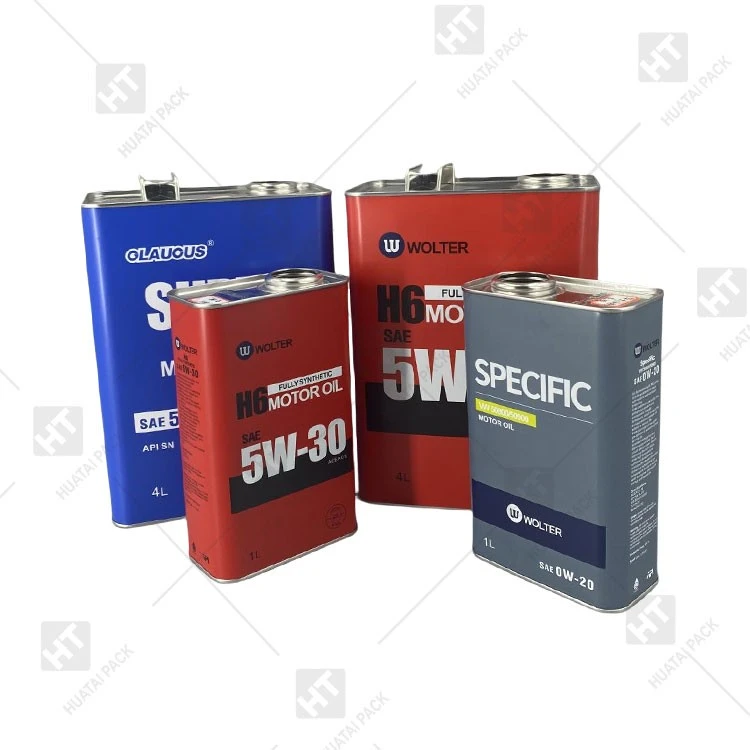
At our company, we offer a wide range of F style oil cans, including [1L 4L Square Tin Can]( /f - style - can/1l - 4l - suqare - tin - can.html), [Square Iron Can]( /f - style - can/square - iron - can.html), and [4L F Styel Can]( /f - style - can/4l - f - styel - can.html). Each of these products is designed and manufactured to meet high - quality standards and specific pressure resistance requirements.
Our 1L and 4L square tin cans are made of high - grade tinplate. They are carefully crafted to have a uniform thickness and strong seams, ensuring excellent pressure resistance. These cans are suitable for storing various types of oils, including lubricating oils and some light - grade fuel oils.

The square iron cans in our product range are known for their robustness. The iron material provides a high level of strength, making these cans capable of withstanding relatively high pressures. They are often used for storing heavy - duty oils and for applications where durability is a top priority.
Our 4L F style cans are designed with a unique F - shaped contour that helps in distributing pressure evenly across the can's surface. This design, combined with high - quality manufacturing processes, results in cans with excellent pressure resistance. These cans are suitable for a wide range of oil storage and transportation needs.
Ensuring Product Quality and Safety
We are committed to ensuring the quality and safety of our F style oil cans. Our production facilities are equipped with advanced manufacturing and testing equipment. Every can undergoes strict quality control procedures before it leaves our factory. We conduct regular pressure tests on our products to ensure that they meet or exceed the industry standards.
In addition, we keep up with the latest research and development in the field of can manufacturing. We continuously improve our products' design and manufacturing processes to enhance their pressure resistance and overall performance.
Contact Us for Procurement and Negotiation
If you are interested in our F style oil cans and want to learn more about their pressure resistance or other features, please feel free to contact us. We are more than willing to discuss your specific requirements and provide you with detailed product information. Whether you are a small - scale oil distributor or a large - scale industrial user, we can offer you the right F style oil cans to meet your needs. Let's start a negotiation and find the best solution for your oil storage and transportation requirements.
References
- "Metal Packaging Technology" by John A. Hotchkiss
- "Handbook of Can Manufacturing" by The Can Manufacturers Institute
- Industry reports on pressure testing standards for oil cans