

What are the grammar rules related to f style can?
Dec 25, 2025
As a supplier of f style cans, I've had numerous interactions with clients who are not only interested in the product itself but also in the proper usage of related language, especially grammar rules. Understanding the grammar rules related to "f style can" is crucial for effective communication in business, marketing, and technical exchanges. In this blog, I'll delve into the key grammar rules and how they apply in various contexts.
Subject - Verb Agreement
One of the fundamental grammar rules when talking about f style cans is subject - verb agreement. When the subject is a singular "f style can," the verb should be in the singular form. For example, "An f style can is a popular choice for packaging." Here, the singular subject "an f style can" is paired with the singular verb "is."
On the other hand, when the subject is plural, such as "f style cans," the verb should be in the plural form. For instance, "F style cans are available in different sizes and materials." The plural subject "f style cans" is correctly matched with the plural verb "are."
This rule is essential in both written and spoken communication. In product descriptions on our website, we need to ensure that sentences like "The f style can has a unique design" (singular) and "These f style cans have excellent durability" (plural) are grammatically correct to convey accurate information to our customers.

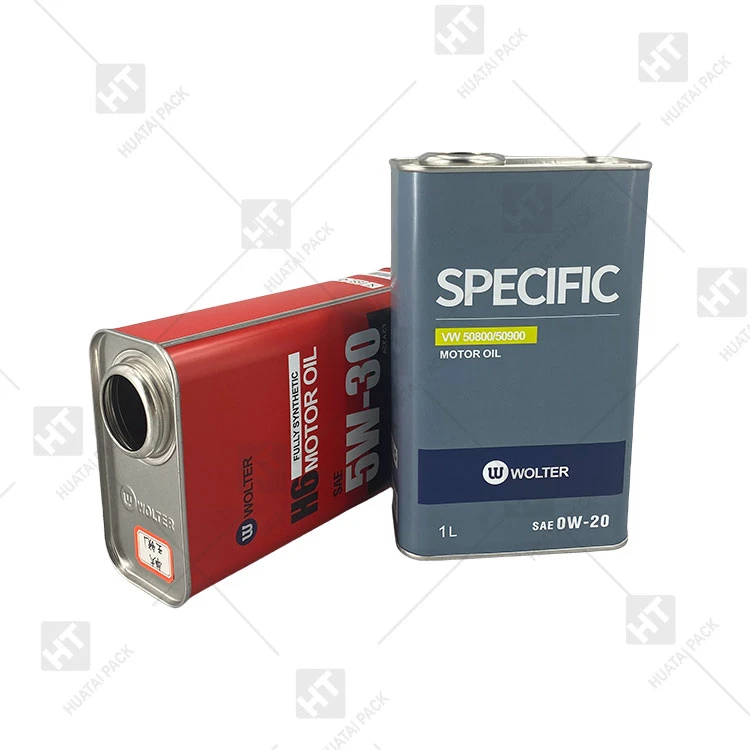
Use of Articles
Articles play a significant role in grammar when referring to f style cans. The indefinite articles "a" and "an" are used when we are talking about a non - specific f style can. We use "a" before a consonant sound and "an" before a vowel sound. For example, "A f style can is suitable for storing various products" (the "f" in "f style" has a consonant sound).
The definite article "the" is used when we are referring to a specific f style can or a particular group of f style cans. For example, "The f style can you ordered last week is ready for shipment." Here, "the" indicates a specific can that the customer ordered.
In marketing materials, the correct use of articles can enhance the clarity of our messages. For example, "An f style can offers great protection for your products" creates a general impression, while "The f style can on our website has been specially designed for long - term storage" refers to a particular can.
Adjectives and Adverbs
Adjectives are used to describe the f style cans, while adverbs are used to modify verbs, adjectives, or other adverbs related to them. For example, we can use adjectives like "sturdy," "attractive," and "lightweight" to describe f style cans. "This sturdy f style can is perfect for heavy - duty use."
Adverbs can be used to describe how the cans are made or perform. For example, "The f style cans are precisely manufactured" or "The can opens easily." The adverb "precisely" modifies the verb "manufactured," and "easily" modifies the verb "opens."
When creating product reviews or technical specifications, using appropriate adjectives and adverbs can help customers better understand the features and performance of our f style cans. For example, "Our f style cans are extremely durable and highly resistant to corrosion."
Prepositions
Prepositions are important for indicating relationships between the f style cans and other elements. For example, "The product is stored in an f style can." The preposition "in" shows the location of the product inside the can.
We can also use prepositions to describe the position or movement of the cans. For example, "The f style cans are placed on the shelf" or "The cans are shipped from our factory to your location."
In shipping and logistics discussions, prepositions are crucial for clear communication. For example, "The f style cans will be delivered to your warehouse by the end of the week."
Relative Clauses
Relative clauses can be used to provide additional information about f style cans. For example, "The f style can, which has a capacity of 4 liters, is very popular among customers." Here, the relative clause "which has a capacity of 4 liters" gives more details about the can.
We can also use relative pronouns like "that" or "who" (although "who" is less common when referring to cans). For example, "The f style cans that we produce are of high quality."
In product catalogs, relative clauses can be used to highlight the features of our f style cans. For example, "The f style can that is made of metal tinplate offers excellent protection" Metal Tinplate Can.
Tenses
Using the correct tenses is vital when talking about f style cans. The present tense is commonly used to describe the general features and properties of f style cans. For example, "F style cans are used for packaging a wide range of products."
The past tense is used when we are talking about events or actions that have already happened. For example, "We produced a large number of f style cans last month."
The future tense is used to talk about future plans or actions related to f style cans. For example, "We will launch a new series of f style cans next year."
In business correspondence, accurate use of tenses helps us convey our intentions clearly. For example, "We have received your order for f style cans, and we will process it as soon as possible."
Compound Sentences and Coordination
Compound sentences are formed by joining two or more independent clauses using coordinating conjunctions like "and," "but," "or." For example, "F style cans are durable, and they have an attractive design." The conjunction "and" combines two independent thoughts about the cans.
We can also use "but" to show contrast. For example, "The f style can is lightweight, but it is very strong." And "or" is used to present alternatives. For example, "You can choose a 4L f style can or a smaller size" 4L F Styel Can.
In marketing campaigns, compound sentences can be used to present multiple benefits of our f style cans in a single statement. For example, "Our f style cans are cost - effective, and they are environmentally friendly."
Conditional Sentences
Conditional sentences are used to express a condition and its result. For example, "If you order a large quantity of f style cans, you will get a discount." Here, the condition is "order a large quantity," and the result is "get a discount."
There are different types of conditional sentences, such as first conditionals (real - life possible situations), second conditionals (unlikely or hypothetical situations), and third conditionals (past unreal situations). For example, "If we had more advanced technology, we could produce even better f style cans" (second conditional).
In sales negotiations, conditional sentences can be used to offer incentives to our customers. For example, "If you place an order within this week, we will ship the f style cans for free."
Noun Modifiers
Nouns can also be used to modify other nouns when referring to f style cans. For example, "4L Engine Oil Tin Can," where "4L" (a measurement), "Engine Oil" (the type of product it is for), and "Tin" (the material) all modify the noun "Can" 4L Engine Oil Tin Can.
This type of noun - noun modification is common in product names and technical descriptions. It helps to precisely define the characteristics of the f style can. For example, "Food - grade f style can" clearly indicates that the can is suitable for storing food.
In conclusion, understanding the grammar rules related to f style cans is essential for effective communication in the business of supplying these products. From subject - verb agreement to the use of conditional sentences, each grammar rule contributes to the clarity and accuracy of our messages. Whether it's in product descriptions, marketing materials, or business correspondence, correct grammar helps us build trust with our customers and convey the value of our f style cans.
If you are interested in our f style cans or have any questions about them, please feel free to contact us for further discussion and procurement. We are looking forward to establishing a long - term business relationship with you.
References
- A Comprehensive English Grammar by Quirk, Greenbaum, Leech, and Svartvik
- English Grammar in Use by Raymond Murphy