

Is a 5 gallon tin pail heat - resistant?
Jul 16, 2025
Hey there! As a supplier of 5-gallon tin pails, I often get asked this question: "Is a 5-gallon tin pail heat-resistant?" Well, let's dig into this topic and find out.
First off, we need to understand what a 5-gallon tin pail is made of. Tin pails are usually constructed mainly of steel with a thin layer of tin coating. The steel provides the structural strength, while the tin layer helps prevent rusting.
When it comes to heat resistance, it's not a one-size-fits-all answer. A 5-gallon tin pail can tolerate a certain amount of heat, but it has its limits.
How much heat can it handle?
The steel in the tin pail has a relatively high melting point, typically around 1370 - 1510 degrees Celsius (2500 - 2750 degrees Fahrenheit). However, we're not talking about getting it anywhere close to melting. In normal usage, a 5-gallon tin pail can withstand moderate heat. For instance, if you're storing warm liquids like heated oil or hot water in it, as long as the temperature of the liquid is within 60 - 80 degrees Celsius (140 - 176 degrees Fahrenheit), the pail should be fine.
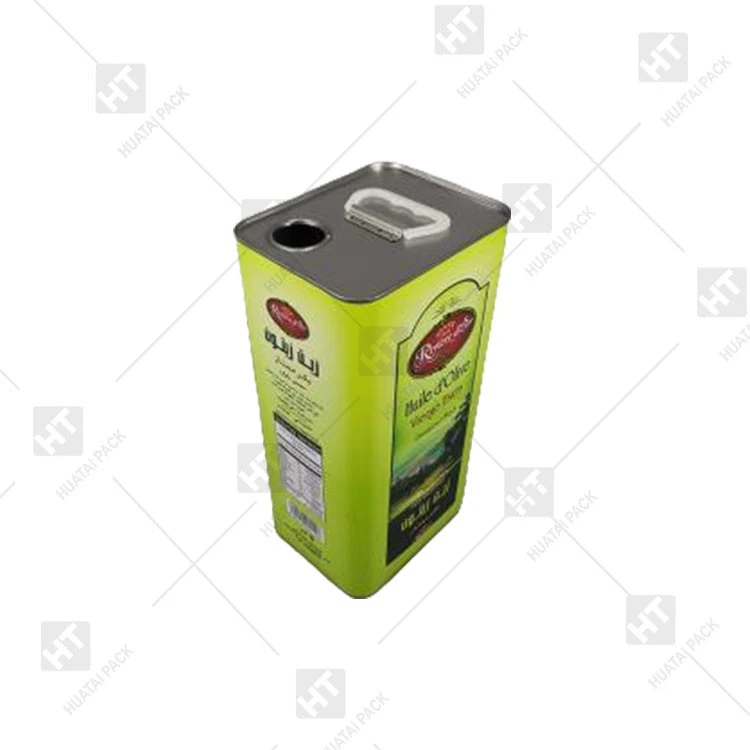

At these temperatures, the tin coating and the steel structure won't be significantly affected. The tin layer acts as a protective barrier and won't start to break down or peel off. And the steel retains its strength and shape.
But if you expose the pail to extreme heat, say, placing it directly on a high - intensity flame or in an oven set at a very high temperature, things can go wrong.
What happens when exposed to extreme heat?
When a 5 - gallon tin pail is exposed to extreme heat, several things can occur. The tin coating might start to melt or flake off. Tin has a relatively low melting point of around 232 degrees Celsius (449.6 degrees Fahrenheit). Once the tin coating is compromised, the underlying steel is exposed to the environment, and it can start to rust quickly, especially if there's any moisture present.
Moreover, the steel itself can undergo structural changes. High heat can cause the steel to expand. If the expansion is uneven, it can lead to warping of the pail. The pail might lose its shape, become dented, or even develop cracks. This not only makes the pail look bad but also affects its functionality. If you're using it to store liquids, a warped or cracked pail can leak.
Applications where heat resistance matters
There are many applications where the heat resistance of a 5 - gallon tin pail is crucial.
-
Industrial uses: In some industrial settings, these pails are used to store and transport heated chemicals or oils. For example, in a manufacturing plant, heated lubricating oil might be stored in 5 - gallon tin pails. It's important that the pail can handle the heat of the oil without degrading. Otherwise, it could contaminate the oil or pose a safety hazard.
-
Food processing: In the food industry, 5 - gallon tin pails are sometimes used to store or transport warm food products. For instance, honey or molasses are often stored in these pails while they're still warm. The pail needs to be heat - resistant to ensure that it doesn't leach any harmful substances into the food and that it maintains its integrity.
Our 5 - gallon tin pails
As a supplier, we take the heat resistance of our 5 - gallon tin pails very seriously. We use high - quality steel and apply a proper tin coating to ensure that our pails can handle the moderate heat that they're likely to encounter in normal use.
We also offer a variety of tin pails to meet different needs. If you're interested in other types of tin containers, you can check out our Pint Gallon Tin Can and Tin Can For Food Ooil. And for those who want something a bit more decorative, we have the Empty Metal Pail with Flower Lid.
Conclusion
So, to answer the question "Is a 5 - gallon tin pail heat - resistant?", the answer is yes, but with limitations. It can handle moderate heat well, but extreme heat will cause problems.
If you're in the market for 5 - gallon tin pails or other tin containers, we're here to help. Whether you need them for industrial, food, or other applications, we can provide you with high - quality products. Don't hesitate to reach out to us for a purchase negotiation. We're looking forward to doing business with you!
References
- Smith, J. (2018). Metals and Their Properties. Industrial Metal Press.
- Brown, A. (2020). Food Packaging Materials and Their Performance. Food Science Journal.