

Are industrial oil cans safe to use in chemical plants?
Jul 28, 2025
In the complex and demanding environment of chemical plants, the choice of storage containers is a critical decision that directly impacts safety, efficiency, and regulatory compliance. As a trusted supplier of industrial oil cans, I am frequently asked about the safety of using our products in chemical plant settings. In this blog post, I will delve into the factors that determine the safety of industrial oil cans in chemical plants and provide insights to help you make informed decisions.
Understanding the Risks in Chemical Plants
Chemical plants handle a wide range of hazardous substances, including corrosive chemicals, flammable liquids, and toxic gases. These substances pose significant risks to workers, equipment, and the environment if not properly stored and handled. The storage containers used in chemical plants must be able to withstand the harsh chemical and physical conditions present in these facilities.
One of the primary concerns in chemical plants is the potential for chemical reactions between the stored substance and the container material. Certain chemicals can react with metals, plastics, or other materials, leading to corrosion, degradation, or the release of harmful byproducts. This can compromise the integrity of the container, causing leaks, spills, or even explosions.
Another risk is the flammability of the stored substances. Many chemicals used in chemical plants are highly flammable, and any ignition source can trigger a fire or explosion. The storage containers must be designed to prevent the ignition of flammable vapors and to contain any potential fires or explosions.
Features of Safe Industrial Oil Cans
To ensure the safety of industrial oil cans in chemical plants, they must possess several key features:
Chemical Resistance
The container material must be resistant to the chemicals it will come into contact with. Different chemicals have different corrosive properties, so it is essential to choose a container material that is compatible with the specific chemicals being stored. For example, stainless steel is a popular choice for storing corrosive chemicals because it is highly resistant to rust and corrosion.
Leak-Proof Design
Industrial oil cans must have a leak-proof design to prevent the escape of hazardous substances. This includes a tight-fitting lid or cap that seals the container securely. Some cans may also feature additional sealing mechanisms, such as gaskets or O-rings, to provide an extra layer of protection against leaks.
Pressure Resistance
In chemical plants, the stored substances may be under pressure, either due to the nature of the chemical or the storage conditions. The industrial oil cans must be able to withstand the pressure without rupturing or leaking. This requires a robust construction and a design that can handle the specific pressure requirements.
Flame Resistance
To prevent the ignition of flammable vapors, industrial oil cans should be made of flame-resistant materials. This can help to contain any potential fires or explosions and reduce the risk of injury or damage. Some cans may also feature additional fire protection features, such as flame arrestors or spark-proof designs.
Durability
Chemical plants are harsh environments, and the industrial oil cans must be able to withstand the rigors of daily use. They should be made of durable materials that can resist impact, abrasion, and other forms of damage. This ensures that the containers will last for a long time and provide reliable storage for the hazardous substances.
Our Industrial Oil Can Products
At our company, we offer a wide range of industrial oil cans that are specifically designed for use in chemical plants. Our products are made of high-quality materials and are engineered to meet the strict safety standards of the chemical industry.
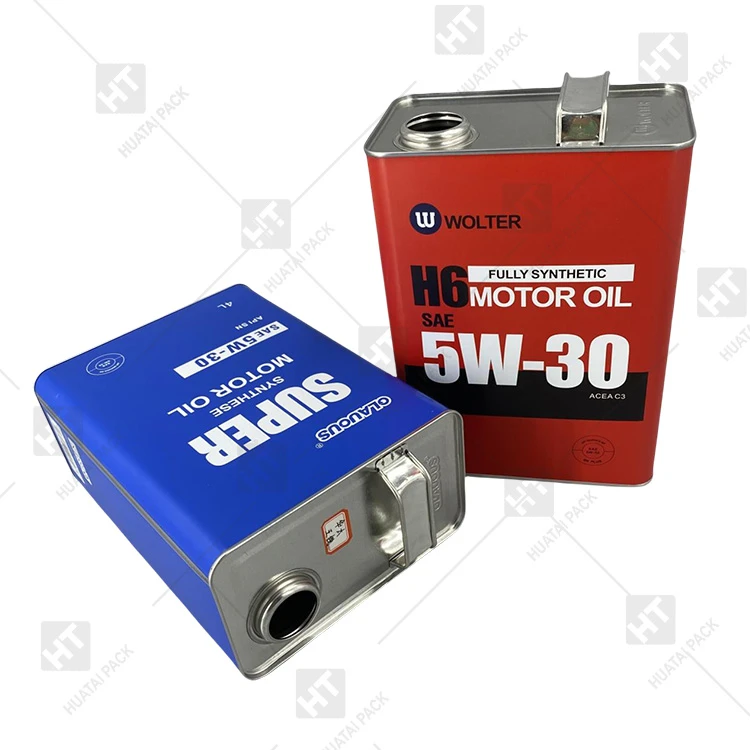
One of our popular products is the 1L Metal Empty Oil Can With Plastic Cap. This can is made of durable metal and features a tight-fitting plastic cap to prevent leaks. It is suitable for storing a variety of chemicals and is resistant to corrosion and impact.
Another product is the Square Engine Oil Can. This can has a unique square shape that makes it easy to stack and store. It is made of high-quality materials and is designed to withstand the harsh conditions of chemical plants.
We also offer the 1L Motor Oil Can. This can is specifically designed for storing motor oil and other lubricants. It is made of a special material that is resistant to oil and grease and has a leak-proof design to prevent spills.
Safety Testing and Certification
To ensure the safety of our industrial oil cans, we conduct rigorous testing and certification processes. Our products are tested for chemical resistance, leak-proofness, pressure resistance, flame resistance, and durability. We also comply with all relevant safety standards and regulations, such as the Occupational Safety and Health Administration (OSHA) standards and the National Fire Protection Association (NFPA) codes.

In addition to our in-house testing, we also work with independent third-party testing laboratories to verify the safety and performance of our products. This provides our customers with an extra level of assurance that our industrial oil cans are safe and reliable.
Conclusion
In conclusion, industrial oil cans can be safe to use in chemical plants if they are designed and manufactured to meet the specific safety requirements of these facilities. Our company offers a wide range of industrial oil cans that are made of high-quality materials, have a leak-proof design, and are resistant to chemicals, pressure, and flames. We also conduct rigorous testing and certification processes to ensure the safety and performance of our products.
If you are looking for a reliable supplier of industrial oil cans for your chemical plant, please contact us to discuss your specific needs. We would be happy to provide you with more information about our products and to help you choose the right container for your application.
References
- Occupational Safety and Health Administration (OSHA). (n.d.). Hazardous Chemicals. Retrieved from [OSHA website]
- National Fire Protection Association (NFPA). (n.d.). Codes and Standards. Retrieved from [NFPA website]
- Chemical Safety and Hazard Investigation Board (CSB). (n.d.). Chemical Incidents. Retrieved from [CSB website]