

Are industrial oil cans resistant to corrosion?
Jul 04, 2025
Are industrial oil cans resistant to corrosion?
As a supplier of industrial oil cans, I've received numerous inquiries about the corrosion resistance of our products. It's a crucial aspect that customers often consider when choosing the right containers for their oils and lubricants. In this blog, I'll delve into the science behind corrosion, the factors that affect the corrosion resistance of industrial oil cans, and how our products stand up to the test.
Understanding Corrosion
Corrosion is a natural process that occurs when metals react with their environment. It's an electrochemical reaction that involves the transfer of electrons from the metal to the surrounding medium, usually oxygen and water. This reaction leads to the formation of metal oxides, which can weaken the metal and eventually cause it to fail.
There are several types of corrosion, including uniform corrosion, pitting corrosion, crevice corrosion, and stress corrosion cracking. Each type of corrosion has its own characteristics and can occur under different conditions. For example, uniform corrosion occurs when the entire surface of the metal is exposed to a corrosive environment, while pitting corrosion occurs when small holes or pits form on the surface of the metal.
Factors Affecting Corrosion Resistance
The corrosion resistance of industrial oil cans depends on several factors, including the type of metal used, the coating applied to the can, the environment in which the can is used, and the type of oil or lubricant stored in the can.
Type of Metal
The type of metal used to make the oil can is one of the most important factors affecting its corrosion resistance. Common metals used in the manufacturing of industrial oil cans include steel, aluminum, and tinplate.
- Steel: Steel is a strong and durable metal that is commonly used in the manufacturing of industrial oil cans. However, steel is prone to corrosion, especially in the presence of oxygen and water. To improve the corrosion resistance of steel oil cans, they are often coated with a layer of zinc or other protective coatings.
- Aluminum: Aluminum is a lightweight and corrosion-resistant metal that is also commonly used in the manufacturing of industrial oil cans. Aluminum has a natural oxide layer on its surface that protects it from corrosion. However, aluminum can be prone to corrosion in the presence of certain chemicals, such as acids and alkalis.
- Tinplate: Tinplate is a steel sheet coated with a thin layer of tin. Tinplate is commonly used in the manufacturing of food and beverage cans, as well as industrial oil cans. The tin coating provides a barrier between the steel and the environment, protecting the steel from corrosion.
Coating
The coating applied to the oil can is another important factor affecting its corrosion resistance. Coatings can provide a barrier between the metal and the environment, preventing oxygen and water from reaching the metal surface.
- Epoxy Coatings: Epoxy coatings are a type of polymer coating that is commonly used in the manufacturing of industrial oil cans. Epoxy coatings are highly resistant to corrosion, chemicals, and abrasion. They can also provide a smooth and easy-to-clean surface.
- Polyester Coatings: Polyester coatings are another type of polymer coating that is commonly used in the manufacturing of industrial oil cans. Polyester coatings are resistant to corrosion, chemicals, and UV radiation. They can also provide a high-gloss finish.
- Lacquer Coatings: Lacquer coatings are a type of solvent-based coating that is commonly used in the manufacturing of industrial oil cans. Lacquer coatings are fast-drying and provide a hard and durable finish. However, lacquer coatings can be prone to cracking and peeling over time.
Environment
The environment in which the oil can is used is also an important factor affecting its corrosion resistance. Factors such as temperature, humidity, and the presence of chemicals can all affect the rate of corrosion.
- Temperature: High temperatures can accelerate the rate of corrosion, especially in the presence of oxygen and water. Therefore, it's important to store industrial oil cans in a cool and dry place.
- Humidity: High humidity can also accelerate the rate of corrosion, as it provides a source of water for the electrochemical reaction. Therefore, it's important to store industrial oil cans in a low-humidity environment.
- Chemicals: The presence of certain chemicals, such as acids, alkalis, and salts, can also accelerate the rate of corrosion. Therefore, it's important to choose an oil can that is resistant to the chemicals that will be stored in it.
Type of Oil or Lubricant
The type of oil or lubricant stored in the oil can can also affect its corrosion resistance. Some oils and lubricants contain additives that can react with the metal of the can and cause corrosion. Therefore, it's important to choose an oil can that is compatible with the type of oil or lubricant that will be stored in it.
Our Industrial Oil Cans
At our company, we offer a wide range of industrial oil cans made from different metals and coated with different protective coatings. Our oil cans are designed to provide excellent corrosion resistance and durability, even in harsh environments.
Chemical Oil Can
Our Chemical Oil Can is made from high-quality steel and coated with a layer of epoxy resin to provide excellent corrosion resistance. The can is designed to store a variety of chemicals, including acids, alkalis, and solvents. The can is also equipped with a leak-proof lid to prevent spills and leaks.
1L Metal Empty Oil Can With Plastic Cap
Our 1L Metal Empty Oil Can With Plastic Cap is made from aluminum and coated with a layer of polyester resin to provide excellent corrosion resistance. The can is designed to store a variety of oils and lubricants, including motor oil, hydraulic oil, and gear oil. The can is also equipped with a plastic cap to provide a tight seal and prevent spills and leaks.
1L Motor Oil Can
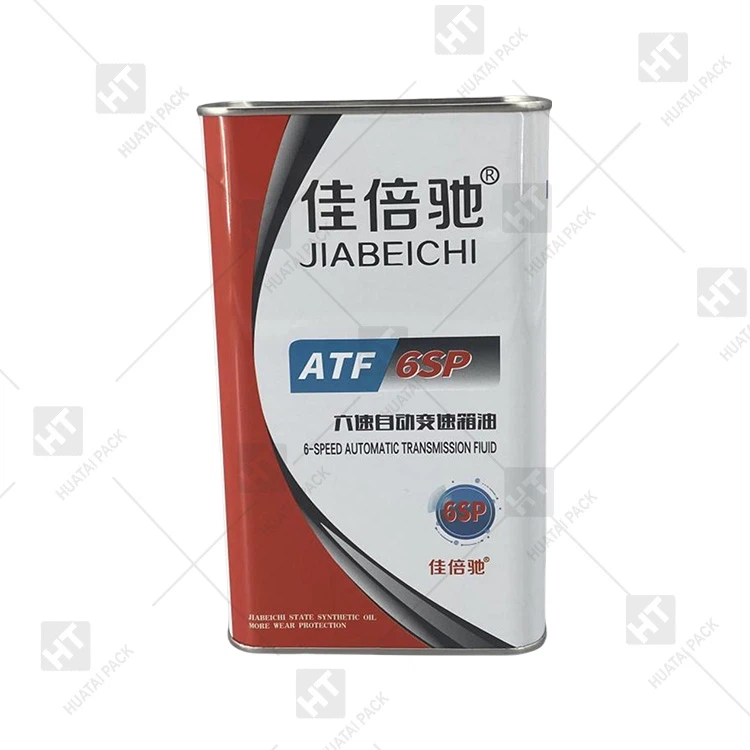
Our 1L Motor Oil Can is made from tinplate and coated with a layer of lacquer to provide excellent corrosion resistance. The can is designed to store motor oil and other lubricants. The can is also equipped with a pour spout to make it easy to pour the oil into the engine.

Conclusion
In conclusion, the corrosion resistance of industrial oil cans depends on several factors, including the type of metal used, the coating applied to the can, the environment in which the can is used, and the type of oil or lubricant stored in the can. At our company, we offer a wide range of industrial oil cans made from different metals and coated with different protective coatings to provide excellent corrosion resistance and durability.
If you're in the market for high-quality industrial oil cans, we invite you to contact us to discuss your specific requirements. Our team of experts will be happy to help you choose the right oil cans for your needs.
References
- Fontana, M. G. (1986). Corrosion engineering (3rd ed.). McGraw-Hill.
- Uhlig, H. H., & Revie, R. W. (1985). Corrosion and corrosion control: An introduction to corrosion science and engineering (3rd ed.). Wiley.
- Schweitzer, P. A. (2004). Corrosion resistance tables (4th ed.). McGraw-Hill.