

What is the profit margin for retailers selling 2l olive oil cans?
Nov 07, 2025
Hey there! I'm a supplier of 2L olive oil cans. If you're a retailer, you're probably wondering about the profit margin when it comes to selling these 2L olive oil cans. Well, let's dive right in and break it down.
First off, let's talk about the cost factors. As a retailer, you've got to consider the price you pay for the 2L olive oil cans from suppliers like me. This cost includes not just the olive oil itself but also the packaging. For instance, our 2L Olive Oil Can is designed to keep the oil fresh and protected. The quality of the can matters a lot because if it's not good, it can affect the oil's quality over time.
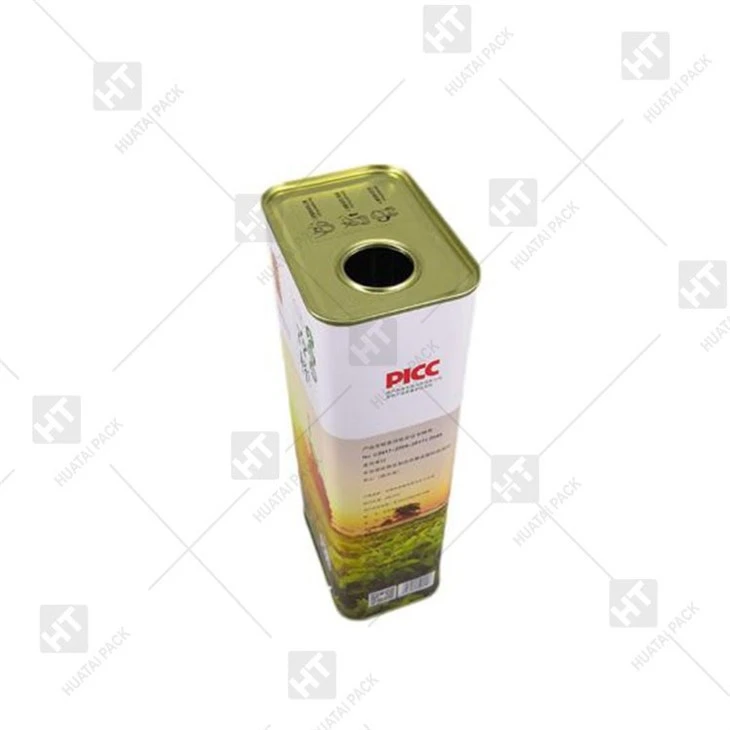
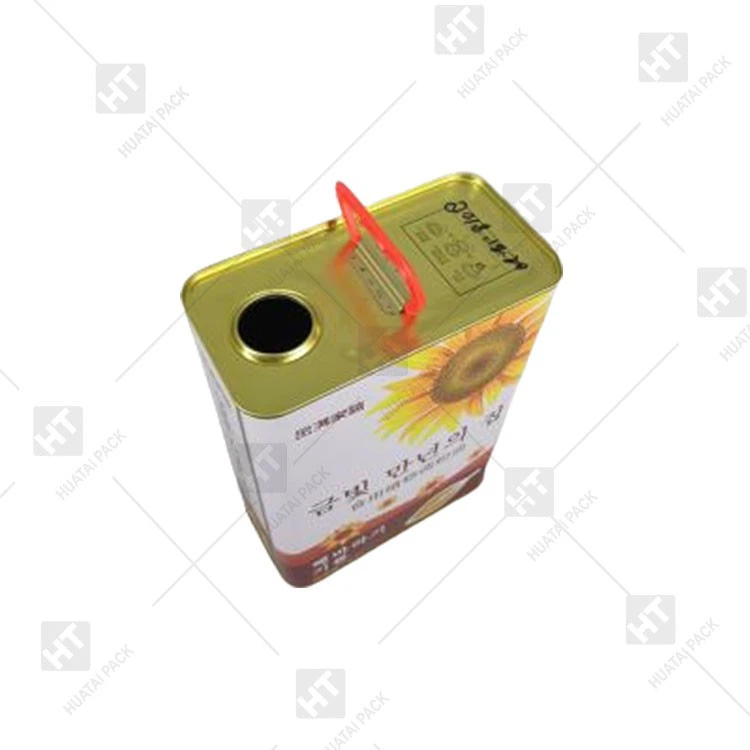
The type of can we use also impacts the cost. We offer Square Tin Can For Olive Oil, which is not only sturdy but also looks great on the shelves. Square cans can sometimes stand out more compared to regular round ones, potentially attracting more customers. And then there are Empty Metal Olive Oil Can options. Some retailers might prefer to buy empty cans and fill them with their own choice of olive oil. This can give them more control over the product and potentially reduce costs in some cases.
Now, let's get into the actual profit - margin calculation. The profit margin is basically the difference between the selling price and the cost price, divided by the selling price, and then multiplied by 100 to get a percentage.
Let's assume you buy a 2L olive oil can from me at a cost of $15. This price includes the cost of the oil, the can, and all the other associated costs like shipping and handling. You then sell this can in your store for $25. To calculate the profit margin, first, find the profit. The profit is the selling price minus the cost price, so $25 - $15 = $10. Then, divide the profit by the selling price: $10 / $25 = 0.4. Multiply this by 100 to get the percentage, so 0.4 * 100 = 40%. That means your profit margin in this case is 40%.
But it's not always that simple. There are other costs you need to consider. For example, there are overhead costs. These include rent for your store, utilities like electricity and water, and the salaries of your employees. Let's say your overhead costs for each 2L olive oil can sold come up to $2. Now, your actual profit per can is $10 - $2 = $8. Recalculating the profit margin, $8 / $25 = 0.32, and then 0.32 * 100 = 32%. So, your profit margin drops to 32% after accounting for overhead costs.
Another factor that can affect the profit margin is competition. If there are other retailers in your area selling similar 2L olive oil cans at a lower price, you might have to lower your selling price to stay competitive. Let's say you have to drop the selling price to $22 to match your competitors. Now, the profit is $22 - $15 - $2 (overhead costs) = $5. The new profit margin is $5 / $22 ≈ 0.227, and 0.227 * 100 ≈ 22.7%.
The quality of the olive oil also plays a role. High - quality olive oil usually commands a higher price. If you're selling a premium 2L olive oil can that you bought from me at a cost of $20 and sell it for $35, with $2 in overhead costs, the profit is $35 - $20 - $2 = $13. The profit margin is $13 / $35 ≈ 0.371, or about 37.1%.
Market demand is yet another important aspect. During certain seasons, like holidays, the demand for olive oil might increase. You can potentially increase your selling price during these peak seasons. For example, if you normally sell a 2L can for $25, during the holiday season, you might be able to sell it for $28. With the same cost price of $15 and $2 in overhead costs, the profit is $28 - $15 - $2 = $11. The profit margin is $11 / $28 ≈ 0.393, or about 39.3%.
As a retailer, you can also use marketing strategies to increase your profit margin. For example, you can offer bundle deals. Sell two 2L olive oil cans for $45 instead of $50 if bought separately. This can encourage customers to buy more, increasing your overall sales volume. Even though the per - can profit might be a bit lower in a bundle deal, the increased volume can lead to higher overall profits.
In conclusion, the profit margin for retailers selling 2L olive oil cans can vary widely depending on many factors such as the cost price, selling price, overhead costs, competition, quality of the product, market demand, and marketing strategies. As a supplier, I'm always here to work with you to find the best solutions that can help you maximize your profit margin.
If you're interested in starting a partnership or want to discuss more about the pricing and options for our 2L olive oil cans, don't hesitate to reach out. We can have a detailed chat about how we can work together to make your business more profitable.
References:
- Basic accounting principles for profit - margin calculation
- Market research on olive oil sales trends