

What is the production process of the bottom ring lid?
Sep 10, 2025
The production process of the bottom ring lid is a complex and precise operation that combines advanced technology and strict quality control. As a professional bottom ring lid supplier, I am delighted to share with you the detailed steps involved in creating these essential components.
1. Material Selection
The first and most crucial step in the production of bottom ring lids is material selection. The choice of material significantly impacts the lid's performance, durability, and suitability for different applications. Commonly used materials include various grades of steel and aluminum.
Steel is favored for its strength and durability, making it ideal for heavy - duty applications. It can withstand high pressure and is resistant to impact, which is essential when the bottom ring lid is used in industrial settings. Aluminum, on the other hand, is lightweight and corrosion - resistant. It is often used in applications where weight is a concern, such as in the packaging of consumer goods. For more information about our bottom ring lids made from different materials, you can visit Bottom Ring Lid.
2. Cutting
Once the appropriate material is selected, the cutting process begins. Cutting is the process of shaping the raw material into the desired size and shape for the bottom ring lid. Modern cutting techniques, such as laser cutting and waterjet cutting, are commonly employed in our production.
Laser cutting offers high precision and speed. It can cut through various thicknesses of metal with minimal distortion, ensuring that the edges of the bottom ring lid are smooth and accurate. Waterjet cutting, on the other hand, is a versatile method that can cut through a wide range of materials, including those that are heat - sensitive. This process uses a high - pressure stream of water mixed with abrasive particles to cut the metal, resulting in a clean and precise cut.
3. Forming
After cutting, the next step is forming. Forming is the process of bending and shaping the cut metal into the characteristic shape of the bottom ring lid. This is typically done using specialized machinery, such as stamping presses.
Stamping presses use a die to apply pressure to the metal, forcing it into the desired shape. The die is designed to create the specific features of the bottom ring lid, such as the ring shape, the lip for sealing, and any other necessary indentations or protrusions. The forming process must be carefully controlled to ensure that the lid meets the required dimensions and tolerances. Any deviation from the specifications can affect the lid's performance, such as its ability to seal properly.
4. Surface Treatment
Surface treatment is an important step in the production of bottom ring lids. It not only enhances the aesthetic appearance of the lid but also provides protection against corrosion and wear. There are several surface treatment methods available, including painting, galvanizing, and powder coating.
Painting is a common surface treatment method that can provide a wide range of colors and finishes. It can also add an extra layer of protection to the metal. Galvanizing involves coating the metal with a layer of zinc, which acts as a sacrificial anode, protecting the underlying metal from corrosion. Powder coating is another popular option. It involves applying a dry powder to the metal surface and then heating it to form a hard, durable finish. This method offers excellent corrosion resistance and a smooth, uniform appearance. For more details about our surface - treated products, you can refer to Accessories For Metal Packing.
5. Assembly (if applicable)
In some cases, the bottom ring lid may require assembly with other components. For example, it may need to be fitted with gaskets or seals to ensure a tight and leak - proof closure. Assembly is a meticulous process that requires careful handling and precision.
The gaskets or seals are typically made from rubber or other elastomeric materials. They are carefully placed and secured in the appropriate position on the bottom ring lid. The assembly process must be carried out in a clean environment to prevent contamination, which could affect the performance of the seal.
6. Quality Control
Quality control is an integral part of the production process. At every stage of production, from material selection to assembly, strict quality control measures are in place to ensure that the bottom ring lids meet the highest standards.
We use a variety of inspection methods, including visual inspection, dimensional measurement, and functional testing. Visual inspection is used to check for any surface defects, such as scratches, dents, or unevenness. Dimensional measurement is carried out using precision measuring tools, such as calipers and micrometers, to ensure that the lid meets the specified dimensions. Functional testing is used to verify the lid's performance, such as its ability to seal properly and withstand pressure. Only products that pass all quality control checks are approved for shipment.
7. Packaging and Shipping
Once the bottom ring lids have passed quality control, they are ready for packaging and shipping. Proper packaging is essential to protect the lids during transportation and storage.
The lids are typically packed in boxes or crates, with appropriate cushioning materials to prevent damage. The packaging is labeled with important information, such as the product name, quantity, and any special handling instructions. We work with reliable shipping partners to ensure that the products are delivered to our customers in a timely and safe manner.
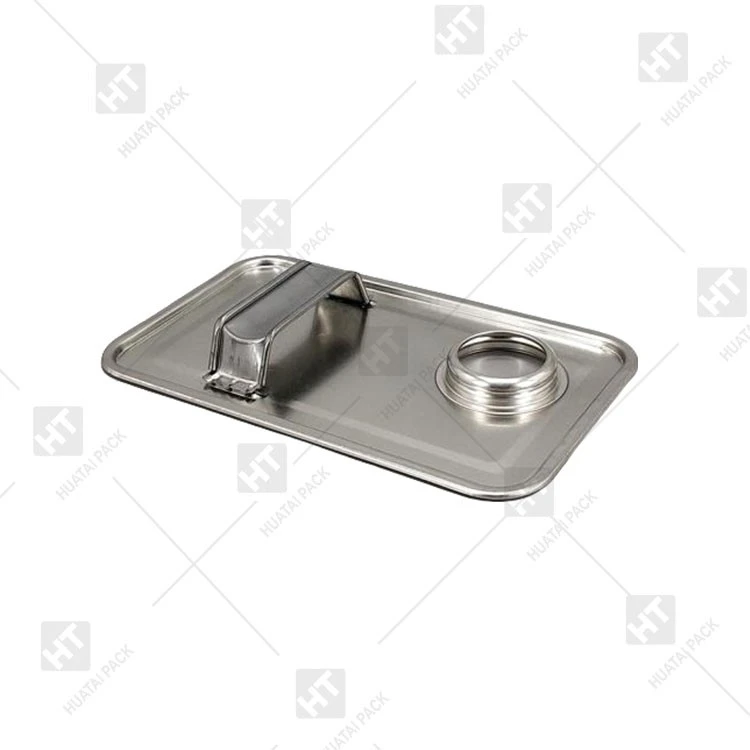

As a leading bottom ring lid supplier, we are committed to providing high - quality products and excellent customer service. Our bottom ring lids are widely used in various industries, including food and beverage, chemical, and industrial packaging. If you are interested in our products, especially our Accessories For 1L 5L Square Cans, please feel free to contact us for more information and to discuss your specific requirements. We look forward to the opportunity to work with you and meet your bottom ring lid needs.
References
- Metal Forming Handbook: Principles and Applications, ASM International
- Surface Engineering for Corrosion and Wear Protection, Woodhead Publishing