

What is the durability of an engine oil can?
Jul 21, 2025
Hey there! As an engine oil can supplier, I've been in the thick of the industry for quite a while. And one question that keeps popping up is, "What is the durability of an engine oil can?" Well, let's dive right into it and find out.
First off, what do we mean by durability? When it comes to engine oil cans, durability refers to how well the can stands up to various conditions over time. It's about withstanding physical impacts, chemical reactions, and environmental factors without failing or compromising the quality of the oil inside.
Physical Durability
Let's start with physical durability. Engine oil cans are often subjected to rough handling during transportation and storage. They might get bumped around in trucks, stacked on top of each other in warehouses, or even dropped accidentally. That's why it's crucial for them to be tough enough to resist dents and punctures.
Most of the engine oil cans we supply are made from high - quality tinplate. Tinplate is a steel sheet coated with a thin layer of tin. This combination gives the can excellent strength and corrosion resistance. The steel provides the structural integrity, while the tin acts as a protective barrier.
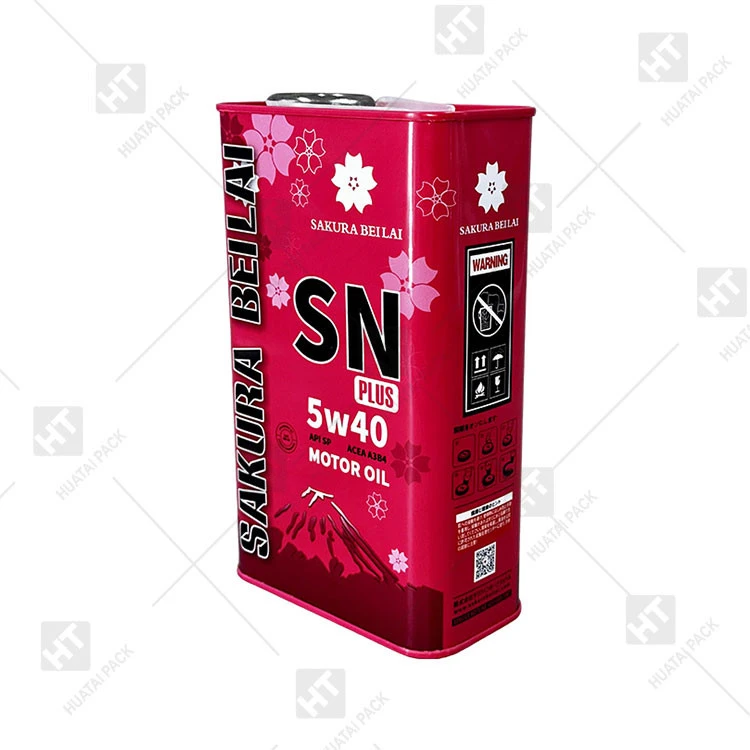
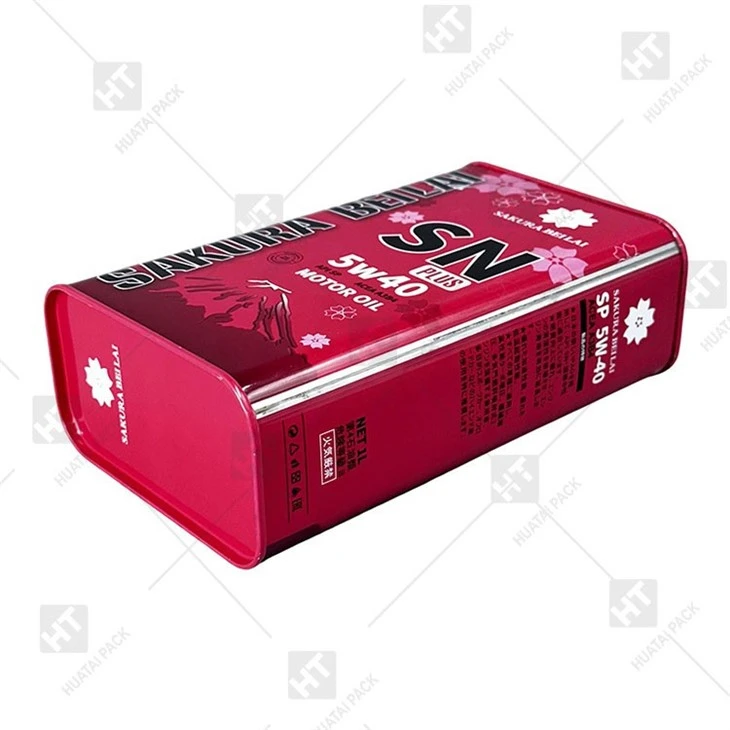
For example, our 1L Engine Oil Tin Can is designed to be sturdy. It can handle the normal wear and tear of being moved around in a busy automotive shop or a distribution center. The shape of the can also plays a role in its physical durability. A well - designed can with smooth edges and a proper shape distribution can better withstand external forces.
Similarly, our 4L Engine Oil Tin Can is built to last. It's a larger can, so it needs to be even more robust to hold the extra volume of oil. We've optimized the thickness of the tinplate and the design of the can to ensure it doesn't easily deform under pressure.
Chemical Durability
Now, let's talk about chemical durability. Engine oil is a complex mixture of hydrocarbons and additives. It can be quite corrosive over time, especially if the can isn't properly protected. That's why the inner coating of the can is so important.
Our engine oil cans have a special inner coating that acts as a barrier between the oil and the metal. This coating prevents the oil from reacting with the tinplate, which could lead to rusting and contamination of the oil. The coating is carefully selected to be compatible with different types of engine oils, whether they are synthetic, semi - synthetic, or conventional.
In addition to the oil itself, the can also needs to resist other chemicals it might come into contact with. For instance, in a workshop environment, the can might be exposed to cleaning agents or other automotive fluids. Our cans are designed to withstand these chemical interactions without deteriorating.
Environmental Durability
The environment also has a big impact on the durability of an engine oil can. Cans are often stored in different conditions, from hot and humid warehouses to cold and dry storage facilities. Temperature and humidity can affect the metal and the inner coating of the can.
In high - humidity environments, there's a greater risk of rusting. But our cans are treated to resist moisture. The tin coating on the outside helps to repel water, and the inner coating provides an extra layer of protection. On the other hand, in cold temperatures, the can needs to remain flexible enough not to crack. Our tinplate is engineered to have good cold - resistance properties.
Another environmental factor is sunlight. Prolonged exposure to sunlight can cause the outer coating of the can to fade and degrade. We use high - quality paints and coatings on our cans that are UV - resistant. This ensures that the can looks good and remains durable even when exposed to sunlight for extended periods.
Design and Manufacturing for Durability
At our company, we take durability seriously from the design phase all the way through to manufacturing. Our design team uses advanced software to simulate different stress scenarios on the can. They test how the can will perform under various loads, impacts, and chemical exposures.
During the manufacturing process, we have strict quality control measures in place. We check the thickness of the tinplate, the quality of the inner and outer coatings, and the overall integrity of the can. Any cans that don't meet our high - quality standards are rejected.
We also offer a variety of can shapes and sizes, like our Rectangular Tin Cans. These cans are not only practical for storage and transportation but are also designed with durability in mind. The rectangular shape provides stability, and the manufacturing process ensures that all the seams and joints are strong.
Testing for Durability
To ensure the durability of our engine oil cans, we conduct a series of tests. We perform drop tests to see how the can withstands being dropped from different heights. We also do pressure tests to check the can's ability to hold the oil under different pressure conditions.
Chemical resistance tests are carried out by exposing the can to different chemicals for a certain period and then checking for any signs of corrosion or degradation. Environmental tests involve subjecting the cans to different temperature and humidity conditions to simulate real - world storage scenarios.
Why Durability Matters
You might be wondering, why does the durability of an engine oil can matter so much? Well, for starters, a durable can protects the quality of the engine oil. If the can is damaged or corroded, it can contaminate the oil, which can then lead to engine problems.
For suppliers and distributors, durable cans mean less product loss. They don't have to worry about cans leaking or getting damaged during transportation and storage. And for end - users, a durable can is more convenient. They can store the oil for longer periods without having to worry about the can deteriorating.
Conclusion
So, in conclusion, the durability of an engine oil can is a combination of physical, chemical, and environmental factors. Our engine oil cans are designed and manufactured to be tough, resistant to chemicals, and able to withstand different environmental conditions.
If you're in the market for high - quality engine oil cans, whether it's the 1L Engine Oil Tin Can, 4L Engine Oil Tin Can, or Rectangular Tin Cans, we've got you covered. We're always ready to have a chat about your specific needs and how our cans can meet them. Reach out to us for a quote or to start a procurement discussion, and let's work together to get the best engine oil cans for your business.
References
- "Metals in Packaging: Properties and Applications" - A textbook on the properties of metals used in packaging, which provides in - depth knowledge about tinplate and its durability.
- "Automotive Fluids and Their Compatibility with Packaging Materials" - A research paper that focuses on the chemical interactions between engine oil and packaging materials.