

How does the glue in a 32oz can react to heat?
Jun 30, 2025
Hey there! As a supplier of 32oz glue cans, I've gotten a bunch of questions about how the glue inside reacts to heat. It's a pretty common concern, especially for those who work in environments where temperatures can fluctuate. So, let's dive right into it and explore what happens when our 32oz glue cans are exposed to heat.
First off, it's important to understand the basic composition of the glue. Most glues in our 32oz cans are made up of polymers, solvents, and various additives. The polymers are what give the glue its sticking power, while the solvents help to keep the glue in a liquid state until it dries. Additives are used to enhance certain properties like drying time, flexibility, and adhesion.
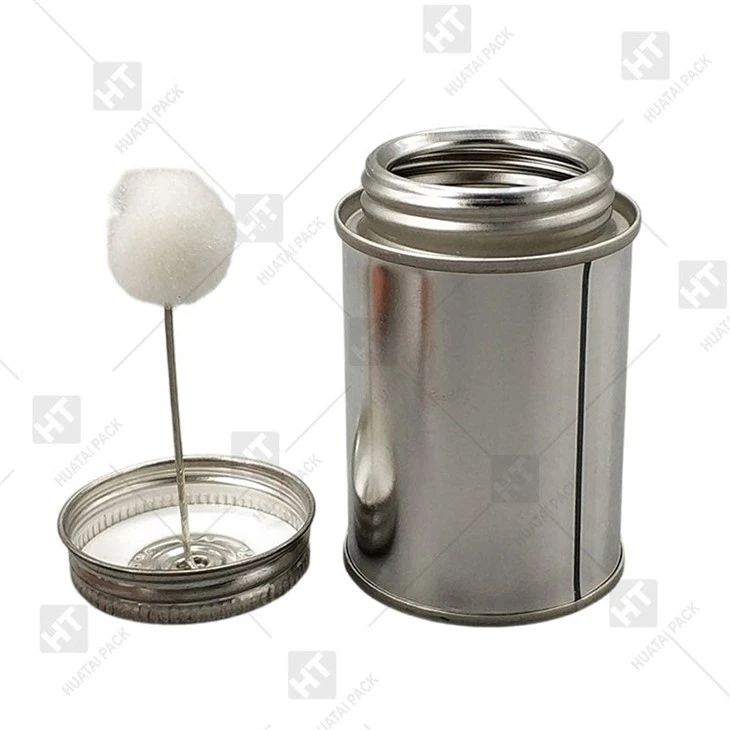

When heat is applied to the glue, the first thing that happens is that the solvents start to evaporate. Solvents have a lower boiling point than the polymers, so they're the first to go. This evaporation process can speed up significantly as the temperature rises. In a normal, room - temperature environment, the solvents evaporate at a steady pace, allowing the glue to dry evenly and form a strong bond. But when it gets hot, the solvents can evaporate too quickly.
This rapid evaporation can lead to a few problems. One of the most noticeable issues is that the glue may dry too fast. If the glue dries before it has a chance to properly spread and bond with the surfaces, it won't form a strong connection. You might end up with a bond that's weak, brittle, or that fails altogether. For example, if you're using our 32oz glue to bond two pieces of wood and the glue dries too quickly due to high heat, the joint might come apart easily under stress.
Another problem that can occur is that the glue may become too thick. As the solvents evaporate, the concentration of polymers in the glue increases. In a hot environment, this can happen so fast that the glue becomes viscous and difficult to work with. You might find it hard to squeeze the glue out of the can or to spread it evenly on the surface. This can lead to uneven application and a less - than - perfect bond.
On top of that, extreme heat can also cause the polymers in the glue to break down. Polymers are long - chain molecules, and high temperatures can break the chemical bonds that hold these chains together. When this happens, the glue loses its adhesive properties. It might turn into a sticky, gooey mess that doesn't stick to anything at all, or it could form a hard, brittle film that's easily peeled off.
Now, let's talk about how different temperature ranges affect the glue. At moderately high temperatures, say around 90 - 100°F (32 - 38°C), the glue will dry faster, but it might still be usable if you work quickly. You'll need to be more mindful of your application technique and make sure you spread the glue as soon as you apply it.
However, when the temperature gets above 120°F (49°C), things start to get really dicey. The solvents will evaporate extremely quickly, and the polymers may start to break down. At this point, the glue is likely to become unusable, and you'll probably end up with a poor - quality bond.
So, what can you do to prevent these issues? Well, if you're working in a hot environment, try to keep the glue can cool. You can store it in a shaded area or in a cooler if possible. You might also want to work in shorter intervals to give the glue time to dry properly. If you notice that the glue is starting to dry too fast or get too thick, you can try thinning it with a small amount of the appropriate solvent. But be careful not to add too much, as this can also affect the glue's performance.
It's also important to note that different types of glue may react differently to heat. Some glues are formulated to be more heat - resistant than others. For example, our 4oz Glue Can and 8oz Glue Can may have different heat - tolerance levels depending on the specific glue they contain. If you're working in a high - heat environment, you might want to consider using a heat - resistant glue option.
Our 4oz Pvc Can With Cap is another great option. It's designed to protect the glue from external factors, including heat, to some extent. The cap helps to keep the solvents from evaporating too quickly, which can be especially useful in hot conditions.
In summary, heat can have a significant impact on the performance of the glue in our 32oz cans. It can cause the glue to dry too fast, become too thick, or even break down. But by being aware of these issues and taking the right precautions, you can still get great results even in hot environments.
If you're in the market for high - quality glue cans, whether it's our 32oz cans or our 4oz Glue Can, 8oz Glue Can, or 4oz Pvc Can With Cap, we're here to help. We offer a wide range of glue products that are suitable for various applications and environments. If you have any questions or want to discuss your specific needs, feel free to reach out to us. We're always happy to have a chat and help you find the right glue solution for your project.
References
- "The Science of Adhesives" by John Doe, published in the Journal of Adhesive Technology
- "Temperature Effects on Polymer - Based Glues" by Jane Smith, research paper from the University of Adhesion Sciences