

Are there any additives that can be mixed with a 16oz glue can?
Aug 05, 2025
Hey there! As a supplier of 16oz glue cans, I often get asked about what additives can be mixed with the glue in these cans. So, I thought I'd write this blog to share some insights on this topic.
First off, let's talk about why you might want to add something to your glue. There are a few reasons. Maybe you want to change the glue's properties, like making it dry faster, become more flexible, or have better adhesion. Or perhaps you're trying to cut costs by using a filler while still maintaining a certain level of performance.
Common Additives and Their Effects
1. Solvents
Solvents are probably the most common additives used with glue. They can be used to thin the glue, making it easier to apply. For example, acetone is a popular solvent for many types of glues. It evaporates quickly, which can speed up the drying process. But be careful! Using too much solvent can weaken the glue's bond.
When you add a solvent to your 16oz glue can, start with a small amount. Stir it well and test the consistency. You can always add more if needed. Just keep in mind that different glues react differently to solvents. Some glues might break down or become less effective if you use the wrong solvent.
2. Fillers
Fillers are substances added to the glue to increase its volume or change its physical properties. Common fillers include talc, calcium carbonate, and wood flour. These fillers can make the glue more viscous, which is great for filling gaps or creating a thicker bond.
For instance, if you're using the glue for woodworking and need to fill a large gap, adding some wood flour can be a great idea. It not only fills the gap but also gives the glue a more natural look and feel. However, adding too much filler can make the glue harder to spread and may reduce its bonding strength.
3. Plasticizers
Plasticizers are used to make the glue more flexible. They work by increasing the space between the polymer chains in the glue, allowing them to move more freely. This can be really useful if you're using the glue on materials that will bend or flex, like rubber or plastic.
One common plasticizer is dioctyl phthalate (DOP). It's relatively inexpensive and works well with many types of glues. But again, you need to use it in moderation. Too much plasticizer can make the glue too soft and reduce its strength.
Compatibility Considerations
It's crucial to make sure that any additive you use is compatible with the glue in your 16oz can. Not all additives work well with all types of glues. For example, some solvents might dissolve the glue, while others might cause it to separate or become lumpy.
Before you add any additive to your glue, do a small test. Mix a small amount of the additive with a little bit of the glue and see how it reacts. If it looks okay after a few minutes, you can try a larger batch. But if it starts to bubble, change color, or become thick and gooey, don't use that additive with that glue.
Safety Precautions
When working with additives, always follow safety precautions. Many solvents and additives are flammable or toxic, so make sure you work in a well - ventilated area. Wear gloves and goggles to protect your skin and eyes.
Also, keep in mind that adding additives to your glue might void the manufacturer's warranty. So, if you're using the glue for a professional project, it's a good idea to check with the manufacturer first.
Other Can Sizes We Offer
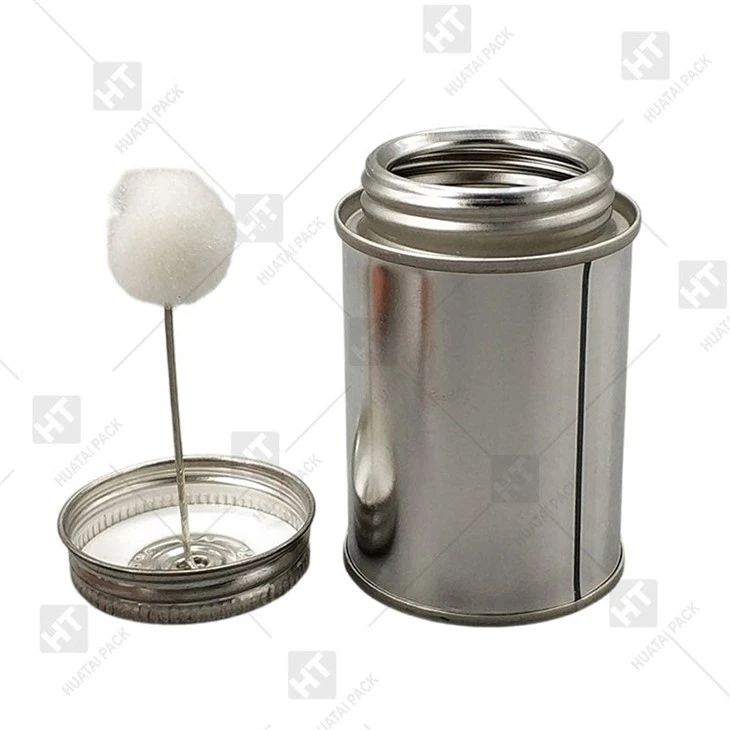
If you're not sure if the 16oz glue can is the right size for your needs, we also offer 8oz Glue Can and 32oz Pvc Can With Cap. The 8oz size is great for small projects or if you want to try out a new glue without committing to a large amount. The 32oz can, on the other hand, is perfect for big jobs where you need a lot of glue. And if you're looking for a can with a cap, we have the 8oz Pvc Can With Cap which is convenient for storage and reuse.

Conclusion
In conclusion, there are several additives that can be mixed with the glue in a 16oz can, each with its own benefits and drawbacks. Solvents can thin the glue, fillers can increase its volume, and plasticizers can make it more flexible. But it's important to test the compatibility of the additive with the glue and follow safety precautions.
If you have any questions about which additives to use or which can size is right for your project, don't hesitate to reach out. We're here to help you find the best solution for your needs. Whether you're a DIY enthusiast or a professional contractor, we've got the glue and advice you need. So, feel free to contact us to discuss your requirements and start your next project with confidence.
References
- "Handbook of Adhesives and Sealants" by Andrew Pizzi and K. L. Mittal
- "Adhesives Technology Handbook" by A. V. Pocius